ABA Therapy Benefits in Daily Life: How It Can Support Independence Beyond the Clinic
If you are trying to understand ABA therapy benefits in practical terms, it helps to look beyond what happens during a session. Many parents are not just asking what ABA is. They want to know whether it can make daily life feel more manageable at home, at school, and in the community.
That question is reasonable. When you are feeling overwhelmed, cautious, or skeptical, broad promises are not very helpful. What matters more is whether therapy can support smoother routines, clearer communication, safer participation, and more confidence over time. For many families, that is where the value of ABA becomes easiest to see.
What ABA therapy benefits actually mean in everyday life
In everyday life, ABA therapy benefits are usually not about dramatic change all at once. They are about helping a child build useful skills that reduce stress and increase independence in meaningful situations.
That may look like asking for help instead of melting down, following a simple morning routine with fewer prompts, tolerating a transition without becoming overwhelmed, or participating more comfortably in meals, play, and community outings. For one child, the priority may be brushing teeth with less resistance. For another, it may be learning to wait, communicate discomfort, or move more safely through public spaces.
The goal is not perfection. The goal is doing more with less support in ways that matter to the child and family. Effective ABA should stay individualized, focusing on the child’s strengths, barriers, developmental stage, and family priorities rather than using the same targets for everyone.
Why independence is the outcome many families care about most
Families often care most about independence because small gains can change the rhythm of the entire day. When a child can communicate needs more clearly, tolerate a transition more easily, or complete part of a self-care task with less help, routines often become less stressful for everyone involved.
Independence does not mean expecting too much too soon. It means supporting a child so they can participate more fully in daily life with less constant prompting. At home, that might mean getting through bedtime with fewer power struggles. At school, it might mean following classroom directions more consistently. In the community, it might mean handling a store visit or family outing with more confidence and predictability.
Progress is usually gradual, and it is not always linear. Some weeks may feel smoother than others. That is why it helps to look for practical, usable wins instead of instant transformation. Articles such as Key ABA Therapy Milestones: What Progress Looks Like can help families recognize how small changes often build into larger independence over time.
Where ABA often supports the biggest daily-life changes
Communication that reduces frustration
Communication is one of the most meaningful areas of support because it affects nearly every part of the day. A child may need help requesting items, asking for a break, handling disappointment, tolerating waiting, or following simple directions. When communication becomes clearer, frustration often decreases.
In real life, that can mean fewer breakdowns when a preferred activity ends, more successful transitions between tasks, or a child being able to say, gesture, or otherwise indicate what they need before distress escalates. For children, these gains often show up during school prep, snack time, play, and peer interaction. The exact communication goal should always match the child’s current abilities and needs rather than a one-size-fits-all expectation.
Routines and transitions that feel less overwhelming
Many families notice the biggest changes in recurring routines. Morning preparation, mealtimes, cleanup, bedtime, and transitions into or out of preferred activities can be especially hard when a child struggles with flexibility, sequencing, or emotional regulation.
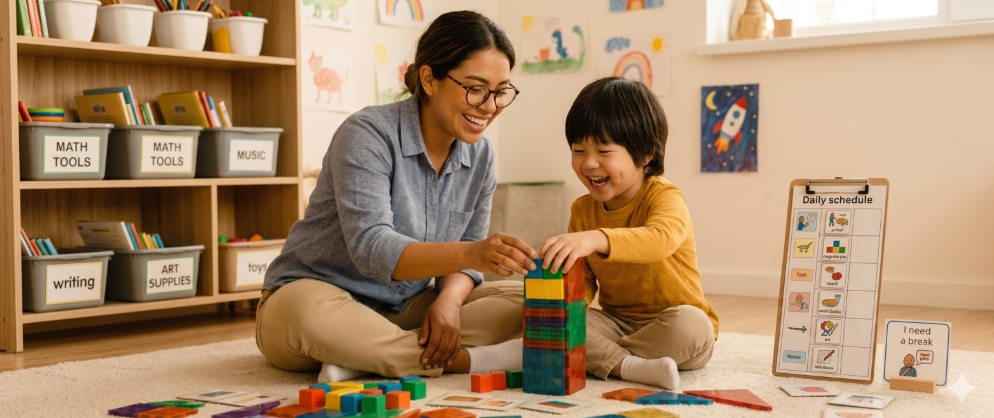
ABA can help by breaking routines into teachable steps, building predictability, and reinforcing successful participation. A child may learn to follow a visual sequence for getting dressed, move from play to dinner with fewer protests, or tolerate the end of screen time with more support and less conflict. These are not overnight changes, but when progress is steady, daily life often feels less chaotic.
Self-care, safety, and participation outside the home
ABA may also support self-care and adaptive skills such as dressing, hygiene, eating, cleaning up, and following safety routines. These areas matter because they connect directly to autonomy and participation.
For a younger child, progress may mean washing hands with fewer prompts, sitting through part of a meal, or learning to stop at a curb. For a school-age child, it may involve packing a backpack, staying close in public, or participating more fully in family activities and play. The point is not to remove every challenge. It is to build practical skills that help the child navigate daily situations more safely and confidently.
How ABA supports progress beyond the clinic
A skill matters most when it works outside the therapy setting. That is the idea behind generalization. A child who can request help during a session still needs to be able to use that skill at home, in the classroom, on the playground, or during a stressful outing.
This is why progress beyond the clinic depends on coordination across settings. Therapy may introduce and strengthen a skill, but daily routines give that skill meaning. Families can often tell carryover is happening when they notice less prompting, more consistency, and more flexible use of the same skill with different people and in different places.
In-session success is not the endpoint. Some skills generalize quickly, while others require more practice, more support, or a different teaching plan. When families want a clearer picture of how this process begins, What to Expect in Your First Applied Behavior Analysis (ABA) Therapy Session at CV Lighthouse offers a helpful overview of how goals, routines, and collaboration are introduced.
The BEACON Independence Lens
B - Break down the hardest daily barriers
Start with the moments that feel hardest right now. That may be transitions, communication breakdowns, self-care tasks, meals, or public outings. Naming those barriers clearly creates a more useful starting point than talking about “benefits” in general terms.
E - Evaluate everyday impact
The most important goals are often the ones that noticeably improve family life. A skill matters because it reduces stress, increases participation, or helps the child move through the day with more confidence. Functional goals usually matter more than goals that look impressive on paper but do not change much at home.
A - Anchor goals to autonomy
Meaningful progress should be tied to the next realistic step toward greater independence. That may be tolerating help, completing part of a task alone, or communicating a need earlier and more clearly. Autonomy is not the same as perfection, and respectful therapy should protect dignity while building practical life skills.
C - Connect support across settings
Skills become more useful when support is connected across therapy, home, school, and caregiver coaching. This helps children use what they are learning in real situations, and it helps parents feel more confident about what to reinforce. The process should feel collaborative, not overwhelming.
ON - Observe next meaningful wins
Parents often benefit from looking for 30- to 90-day wins that are easy to notice in daily life. That might include smoother routines, clearer requests, safer community outings, more tolerance for transitions, or more participation during family activities. These kinds of changes can be modest at first, but they are often the foundation for broader independence.
Everyday Independence Snapshot
The Everyday Independence Snapshot is a simple way to focus on what matters most right now.
Where daily life feels hardest now
Identify the top three routines creating the most stress. These may include mornings, meals, homework, bedtime, or transitions. Then note where your child needs the most support across home, school, community outings, peer play, or family events.
What progress would look like
Define one or two signs of progress you would realistically notice over the next one to three months. For example, your child may need fewer prompts to start brushing teeth, ask for help before becoming frustrated, or move through a store with greater safety and flexibility.
What to ask the therapy team
Ask how goals are being prioritized and why those goals were chosen first. Ask how communication barriers, self-care needs, and stressful routines will be addressed. Ask how progress will be measured outside sessions, how caregiver coaching will work without overloading the family, and how the plan will adjust if your child is overwhelmed or progressing unevenly.
How parents can support carryover without carrying everything alone
Caregiver involvement matters, but it should not feel like a second full-time job. The most sustainable approach is usually to focus on a few high-impact routines and reinforce the same practical goals across the day.
That might mean using the same simple language around transitions, supporting one self-care step consistently, or practicing a communication strategy during predictable moments like snack time or getting ready for school. For younger children, even small early gains can build over time, which is why resources such as 10 Benefits of Early Intensive Behavioral Intervention can be helpful for understanding how skill-building compounds.
At CV Lighthouse, collaboration should support the family rather than add unsustainable pressure. Therapy works best when it fits real life, respects the child’s pace, and helps everyone move toward clearer, more functional goals.
FAQ
What are the benefits of ABA therapy in daily life?
In daily life, ABA therapy benefits may include clearer communication, smoother routines, stronger self-care skills, better safety awareness, and more consistent participation at home, school, and in the community. The most meaningful benefit is usually greater independence in everyday situations.
How does ABA therapy help children become more independent?
ABA helps by breaking goals into manageable steps, teaching those skills systematically, and practicing them across real routines. Over time, independence means a child can do more with less support, even if progress happens gradually.
How does ABA therapy improve daily living skills?
ABA can target practical daily living skills such as dressing, hygiene, mealtimes, cleanup, following routines, and participating in community activities. These goals should always be individualized based on age, developmental level, and family priorities.
How can parents tell whether ABA is helping outside sessions?
Parents often notice progress through more consistent routines, fewer breakdowns around communication or transitions, less reliance on prompting, and more flexible use of skills with different people and in different settings. Those changes usually matter more than what happens only during a session.
What strategies help ABA skills carry over at home and in the community?
The strongest carryover strategies usually include caregiver coaching, consistent language and expectations, realistic goal selection, and coordination across settings. Families should not be expected to do everything at once. A focused, sustainable plan is usually more effective than trying to work on every skill at the same time.